
How to Choose a Mobility Scooter: A Practical Guide
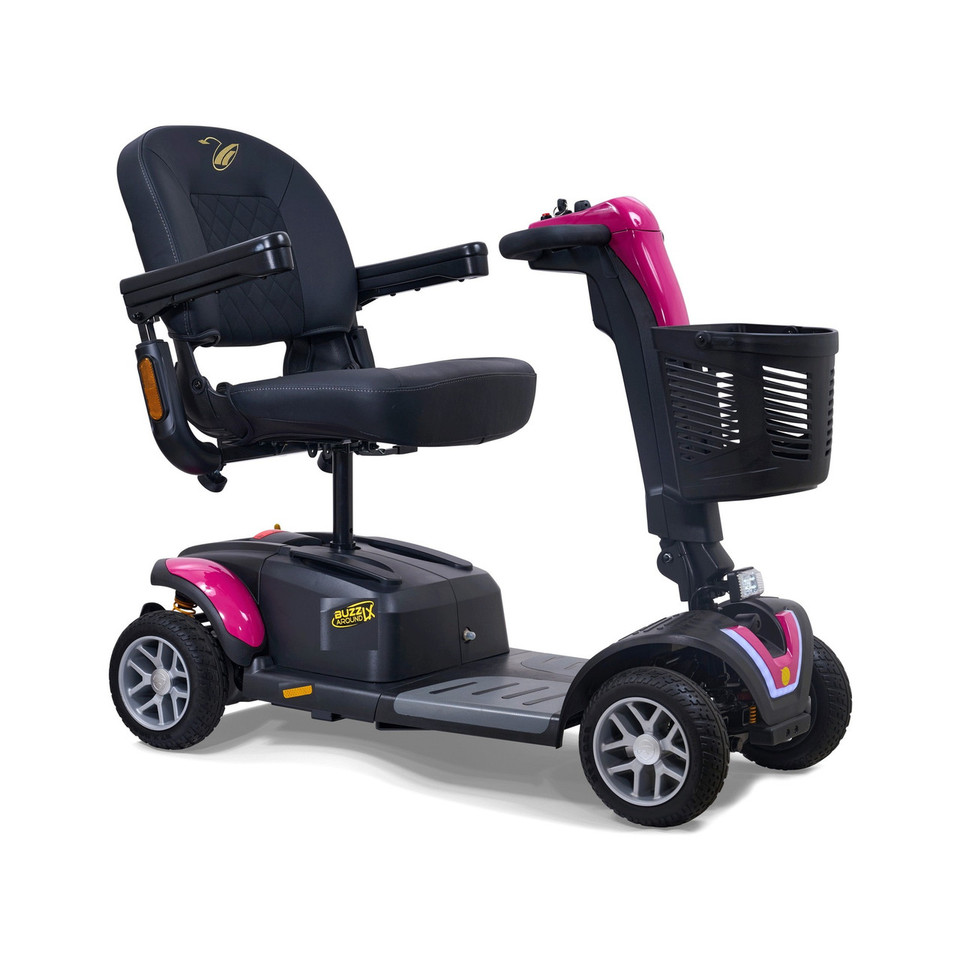
Choose a mobility scooter by working backward from your life: where you will ride, how you will transport it, who will lift it, where it will be stored, and how comfortable the seat and controls feel. Specs come last. A Free Live Fit Session helps narrow the list.
Start with your routes, not the catalog
Many shoppers open a catalog and compare specs. A better first step is to write down where the scooter will actually go. Think of the ten places you visit most: the grocery store, a neighbor's house, a park path, a doctor's parking lot, a family gathering.
For each one, ask what the surface is like, how tight the doorways are, and whether you will be indoors or out. A scooter for smooth indoor floors and a scooter for sidewalks and gravel are built for different jobs.
That short list will do more to narrow your choices than any feature chart. It tells you whether you need tight turning, outdoor stability, or both.
The five questions that shape everything
Nearly every good choice comes down to five questions. Answer them honestly and most of the catalog falls away.
- Where will I ride most? Indoors, outdoors, or a mix.
- How will it travel? In a car, a van, on a lift, or not at all.
- Who lifts it? You, a partner, nobody.
- Where will it live? Garage, closet, porch, apartment hallway.
- How long will I sit on it at a time? Short errands or long outings.
Write the answers on one page. Bring that page to any conversation with us, because it is the most valuable thing you can bring.
Scooter classes in plain language
Mobility scooters fall into rough classes, and knowing them helps you read product pages.
- Travel-class: built to come apart or fold for transport; usually the easiest to lift and store.
- Midsize or standard: a balance between portability and comfort. (This is a descriptive term, not a separate category on scooterpros.com; browse the travel and full-size categories.)
- Full-size: built for comfort and stability on longer or rougher rides.
- Heavy-duty: built for higher demands; discussed further in our weight capacity guide.
Definition: a "3-wheel" scooter typically turns tighter, while a "4-wheel" scooter typically feels steadier. Our 3-wheel vs 4-wheel guide explains the trade-off in detail. Specs for each model vary, so use the live product pages and manufacturer spec sheets for numbers.
Comfort and controls you can judge before buying
Comfort is easy to overlook in a spec chart and impossible to ignore after a week of use. Think about the seat: is it comfortable for the length of your typical ride? Can you get on and off without strain? Does the tiller, the part you steer with, reach a position that suits your arms and shoulders?
Consider the controls too. Can you read the display and operate the throttle comfortably? Are the switches within easy reach?
Because these things are personal, a short video session with a Scooter Pro often helps. Seeing the scooter in motion and talking through your posture brings up issues a product photo never will. This is fit, not medical advice; your clinician can advise on health questions.
Transport and storage reality checks
A scooter you cannot transport or store is a scooter you will not use. Before you fall in love with a model, test the two hardest logistics.
For transport, check the heaviest piece and how the scooter separates, using the product page and spec sheet. Then compare it against your vehicle. Our vehicle guides, such as the Honda CR-V and Subaru Outback posts, show the method.
For storage, measure the spot where the scooter will sit and the route to reach it. A scooter that needs a charger nearby also needs an outlet within reach. These are dull details that decide whether a purchase works.
A sensible way to decide
Shortlist two or three scooters that suit your answers, then compare them on the same page: how they travel, how they feel, how they store, and what each costs to live with. Avoid choosing on a single feature.
Next, test the shortlist against your real life. A Free Live Fit Session lets you talk through your routes, your vehicle, and your home with a Scooter Pro, and see the options on video before you commit.
If you purchase and the scooter turns out to be wrong, Scooter Pros offers a 30-day free exchange after a completed Live Fit demo, no restocking fee (details at purchase). That safety net should be a comfort, not a plan.
Frequently asked questions
What is the most important factor when choosing a mobility scooter?
It is the match between the scooter and your daily life: where you will ride, how it will travel, who will lift it, and where it will be stored. A scooter that looks perfect on paper but fails one of those tests will be frustrating. Start with your routes and logistics, then compare models.
Should I choose a 3-wheel or 4-wheel scooter?
It depends on where you ride. Three-wheel scooters generally offer tighter turning for indoor spaces, while four-wheel scooters generally feel more stable outdoors. Neither is better for everyone. Our 3-wheel vs 4-wheel guide lays out the trade-offs, and a Free Live Fit Session can help you decide.
Do I need to test a scooter before buying?
Testing is ideal, and a Free Live Fit Session is a practical way to do it remotely. You can talk through comfort, controls, and your space with a Scooter Pro. If the scooter is not right once it arrives, Scooter Pros offers a 30-day free exchange after a completed Live Fit demo, no restocking fee (details at purchase).
How do I compare specs between models?
Use the manufacturer spec sheet and the live product page for each model, and compare the same items across all of them. Specs vary by model, so we avoid quoting numbers in general guides. Focus on the ones that connect to your five questions rather than chasing the largest figure.
Related from Scooter Pros
- Buzzaround LX
- Maxima 4-Wheel
- travel scooters
- compare scooters
- 3-wheel vs 4-wheel mobility scooter guide
- restocking fees and 30-day exchange
- Travel vs Full-Size vs Heavy-Duty Mobility Scooters
Book a Free Live Fit Session → https://scooterpros.com/find-your-scooter/ · Call 1-800-520-4558
Specs, weights, and prices vary by model and change. Confirm with the manufacturer and the live product page. Scooter Pros does not provide medical, insurance, or Medicare advice. Scooter Pros does not bill Medicare.
Newest Guide & Blog Updates
Mobility Scooter for an Apartment or Small Space
A compact or travel-class scooter with a tight turning feel usually suits an apartment best. Measure...
Buying a Mobility Scooter for a Parent: A Family Guide
Buying a scooter for a parent works best when the parent leads the decision. Involve them early, obs...
First-Time Mobility Scooter Buyer Checklist
A first-time scooter buyer should decide where it will be used, measure the home and vehicle, settle...
20 Questions to Ask Before Buying a Mobility Scooter
Before buying a mobility scooter, answer twenty questions about where you will ride, how you will tr...
Mobility Scooter Weight Capacity Explained
Weight capacity is the maximum rider load the manufacturer rates a scooter to carry. It varies by mo...
What to Look for in a Mobility Scooter for Outdoor Use
For outdoor use, look for a stable scooter with wheels and suspension suited to your terrain, a comf...