
Mobility Scooter for an Apartment or Small Space
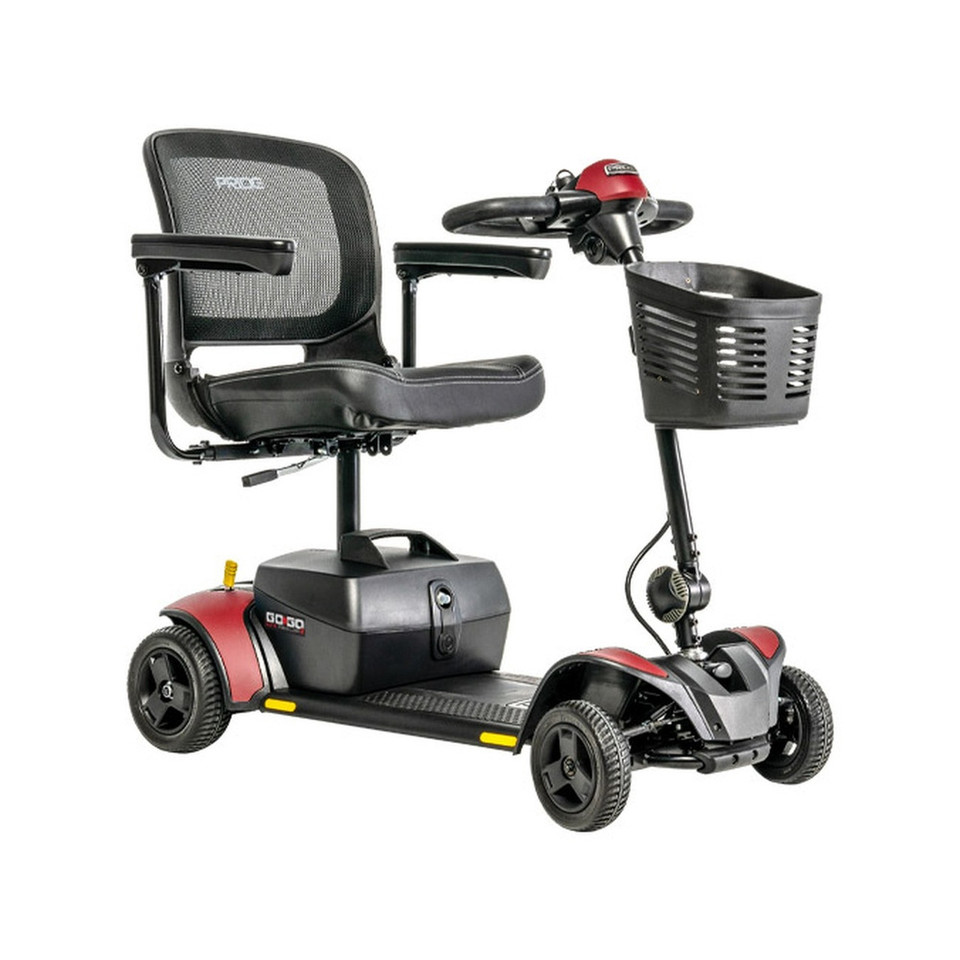
A compact or travel-class scooter with a tight turning feel usually suits an apartment best. Measure your entry, hallway, elevator, and parking spot first, then plan a charging outlet and a protected storage corner. Exact footprints vary by model, so check each spec sheet.
What makes a scooter apartment-friendly?
Small-space living comes down to three things: how the scooter moves through corridors, how much floor it occupies, and whether you can charge it without a hassle.
Definitions: footprint is the floor area the scooter takes up. Turning approach is how tightly it can maneuver in a confined space.
Travel-class scooters are designed with portability in mind, and they are often a natural place for apartment dwellers to start. But the category is no promise of a fit. Dimensions and weights vary from model to model, so use the manufacturer spec sheet and the live product page for each one you consider.
Will it get through my doors and hallways?
Before you look at a single model, measure the route. Start where the scooter will live and work outward.
- The doorway of the storage spot
- The hallway, including any corners
- The apartment entry door and the building door
- The elevator opening and interior, if there is one
- Any threshold, ramp, or step
Write down widths, and notice where you must turn, because turning in a hallway takes more room than going straight. Then compare your numbers with each model's listed width and length.
Leave some margin. A scooter that clears by the thinnest gap will scrape paint and test your patience.
Where do I park and charge it?
A good indoor spot is out of the walking path, close to an outlet, and protected from heat, cold, and moisture. A corner of the entry hall, a spare closet, or a bedroom nook can all work.
- Keep the charger area clear. Do not cover the charger or pile items on it.
- Avoid blocking exits. Hallways and exits need to stay clear for everyone's safety.
- Check building rules. Some buildings have policies about charging and storage in common areas. Ask your property manager in advance.
- Mind the floor. A small mat can protect flooring and catch dirt tracked in on the wheels.
Always follow the charging instructions in your model's manual.
Is a folding or take-apart scooter better for small spaces?
Sometimes. A model that folds or separates into parts can be tucked away, which helps in a tiny home. The trade-off is that parts must be lifted, and the heaviest piece varies by model.
Ask yourself whether you will actually take it apart every day. If it will stay assembled in a corner, the assembled footprint matters more than the folded one. If you will load it in a car regularly, portability matters most. The folding checklist below covers what to think about when parts are handled often.
What about the shared spaces of a building?
Think beyond your own door. Do you cross a lobby, a shared hallway, or a parking garage? Are there automatic doors, a heavy lobby door, or a steep ramp?
Walk the route once without a scooter, noting anything awkward. Check the elevator and any waiting areas. If the mail or package room is on your regular path, see whether it is reachable.
If an obstacle looks like a problem, bring photos to a Free Live Fit Session. A Scooter Pro can help you think through a turning approach and whether a particular class is realistic for your building.
Which classes should I look at first?
Start with travel scooters, then check whether they meet your outdoor needs. If you also ride a lot outside, compare a few full-size models to see how the extra size trades against storage.
Use the compare tool to place two or three candidates side by side, and decide with your measurements in hand. The three-wheel versus four-wheel guide below also explains how layout affects tight turning, which matters a great deal in hallways.
What small habits keep a scooter tidy in a small home?
Living small is mostly about routines. A few habits keep a scooter from taking over the room:
- Wipe the tires before coming in. It keeps floors clean and protects rugs.
- Park in the same place every time. Everyone in the household learns where it lives and stops tripping over it.
- Keep a clear turning zone. Leave a patch of open floor so you are never forced into awkward, scraping maneuvers.
- Coil the charger cord. A loose cord is a tripping hazard in a narrow hallway.
- Turn the key off and remove it. It avoids accidental movement in a cramped space.
Good habits also protect the scooter. Less bumping into door frames means fewer scuffs, and a regular parking spot means a regular charging routine, which helps the battery too.
Frequently asked questions
What is the best type of scooter for a small apartment?
Compact and travel-class scooters are usually the easiest to store and maneuver. Still, footprints differ by model. Measure your route, compare it with the manufacturer spec sheet for each candidate, and then confirm the choice in a Live Fit Session before you buy.
Can I charge a scooter in my apartment?
Most scooters charge from a standard household outlet, but always follow the manual for your model. Place the charger somewhere dry and ventilated, keep cords out of walkways, and check any building rules about charging and storage before you start.
Do I need to fold my scooter to keep it indoors?
Not necessarily. If there is room for the assembled scooter, leave it assembled and ready. Folding or taking apart makes sense when space is very tight or when you transport it often. Check the product page to see how a given model is designed to be stored.
How do I know it will fit through my door?
Measure the narrowest point and any turns, then compare with the width and length on the product page. Leave a margin. If you are unsure, share photos and measurements with a Scooter Pro on a Free Live Fit Session or call 1-800-520-4558.
Related from Scooter Pros
- Go Go Elite Traveller 2
- Go Go Elite Traveller 2 Platinum
- travel scooters
- compare scooters
- 3-wheel vs 4-wheel mobility scooter guide
- folding mobility scooter travel checklist
- How to Measure Your Home for a Mobility Scooter
- What to Look for in a Mobility Scooter for Indoor Use
Book a Free Live Fit Session → https://scooterpros.com/find-your-scooter/ · Call 1-800-520-4558
Specs, weights, and prices vary by model and change. Confirm with the manufacturer and the live product page. Scooter Pros does not provide medical, insurance, or Medicare advice. Scooter Pros does not bill Medicare.
Newest Guide & Blog Updates
Mobility Scooter for an Apartment or Small Space
A compact or travel-class scooter with a tight turning feel usually suits an apartment best. Measure...
Buying a Mobility Scooter for a Parent: A Family Guide
Buying a scooter for a parent works best when the parent leads the decision. Involve them early, obs...
First-Time Mobility Scooter Buyer Checklist
A first-time scooter buyer should decide where it will be used, measure the home and vehicle, settle...
20 Questions to Ask Before Buying a Mobility Scooter
Before buying a mobility scooter, answer twenty questions about where you will ride, how you will tr...
Mobility Scooter Weight Capacity Explained
Weight capacity is the maximum rider load the manufacturer rates a scooter to carry. It varies by mo...
What to Look for in a Mobility Scooter for Outdoor Use
For outdoor use, look for a stable scooter with wheels and suspension suited to your terrain, a comf...